
Monochromatopia
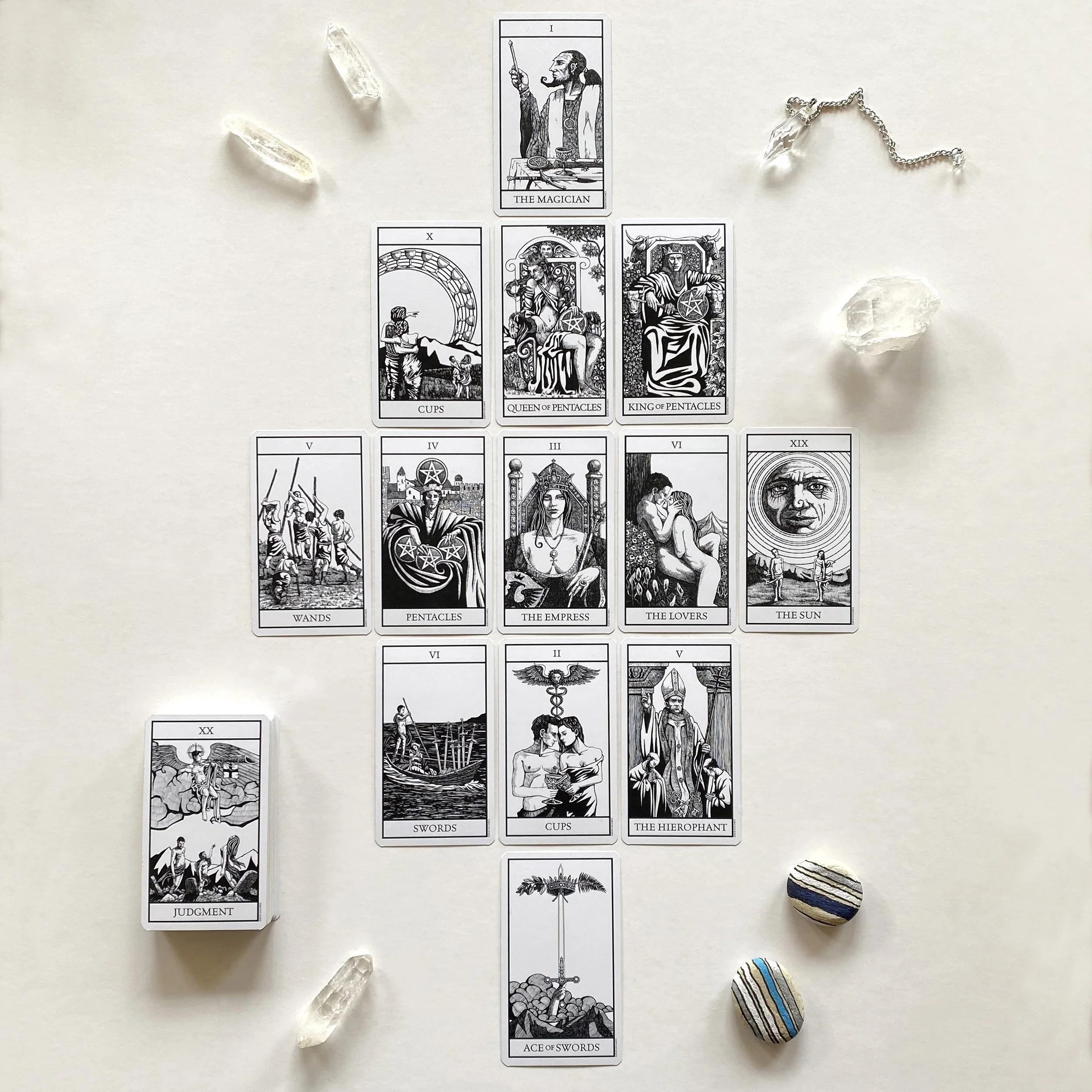
Bianco Nero Tarot
Colour psychology and colour vibration play an immediate yet subtle role on an emotional level in every aspect of our lives, including when we read tarot cards. As soon as I lay the cards I can see and feel from the colour what sort of atmosphere I am looking at. Dark and gloomy, light and bright, a mixture of the two, full of action and fiery or watery, cool and passive.
Colour emits vibration and evokes emotion. We generally see reds as passion, willpower, energy and strength while blues evoke tranquillity, peace and truth; greens evoke growth and abundance, fertility and healing and black can introduce a sense of oppression and darkness. Gold evokes wealth, success, riches and spirituality; purple also evokes spirituality and divination; silver connects us to the moon and femininity, intuition and the spirit realm; white evokes peace and purity; pink evokes romance, compassion, and love. For most of us this colour psychology is embedded within our subconscious and we can immediately sense it when we are reading.
So what happens when you read with a deck that has an absence of colour?
When we read with a black and white deck, other cues come to the foreground first rather than the initial evocative hit of colour psychology.
I read in a cartomantic style rather than using positional tarot spreads. I read the cards in interaction with each other as a tableau, so for me the initial impact with a black and white deck is spatial. Look to where there is calm space in the reading and where things are more hectic and what area of the reading these show up in.
Then look at movement, where is that movement fast, and where does it slow down, and what direction is the movement in the reading heading.
The directionality and the interaction between cards might become more highly pronounced, who are the people, are they facing each other, what are they ignoring or turning away from. What links the cards together, symbol repetition and pattern recognition can also be heightened, as opposed to pinpointing repeated colour recognition or the flow of colour between cards.
Where are the elements at play in the reading, what areas are ‘wet’; and what areas are ‘dry’? Look to where the passive cards are and where the active cards are?
I have a number of black and white decks, and they each have their own voice, the three I have pictured here are:
The Hermetic Tarot by Godfrey Dowson is based on the esoteric working of the Hermetic Order of the Golden Dawn, of which Aleister Crowley, Arthur Edward Waite and Pamela Colman Smith were members. In this deck we see reference to kabbalah, astrological, planetary and magickal symbolism.
Spirit Keepers Tarot First Edition by Benebell Wen encourages the initial practice of ritual colouring of specific symbols to personally engage and activate the deck.
The Bianco Nero by Marco Proietto draws from the classic Visconti deck and the Rider Waite Smith deck. All three decks read quite differently, based on the unique voice of the artwork in each deck.
If you ever needed a reason to have multiple decks, one of them should be to continually stretch and mix up your visual interpretation techniques, to read each deck with it’s own voice, letting the artwork guide your interpretation in conjunction with the analysis of the Tarot system itself.
Written by Bec Birrell
Professional Cartomancer, Designer, Tarot Teacher and Co-author of The Original Petit Etteilla with Caitlin Matthews
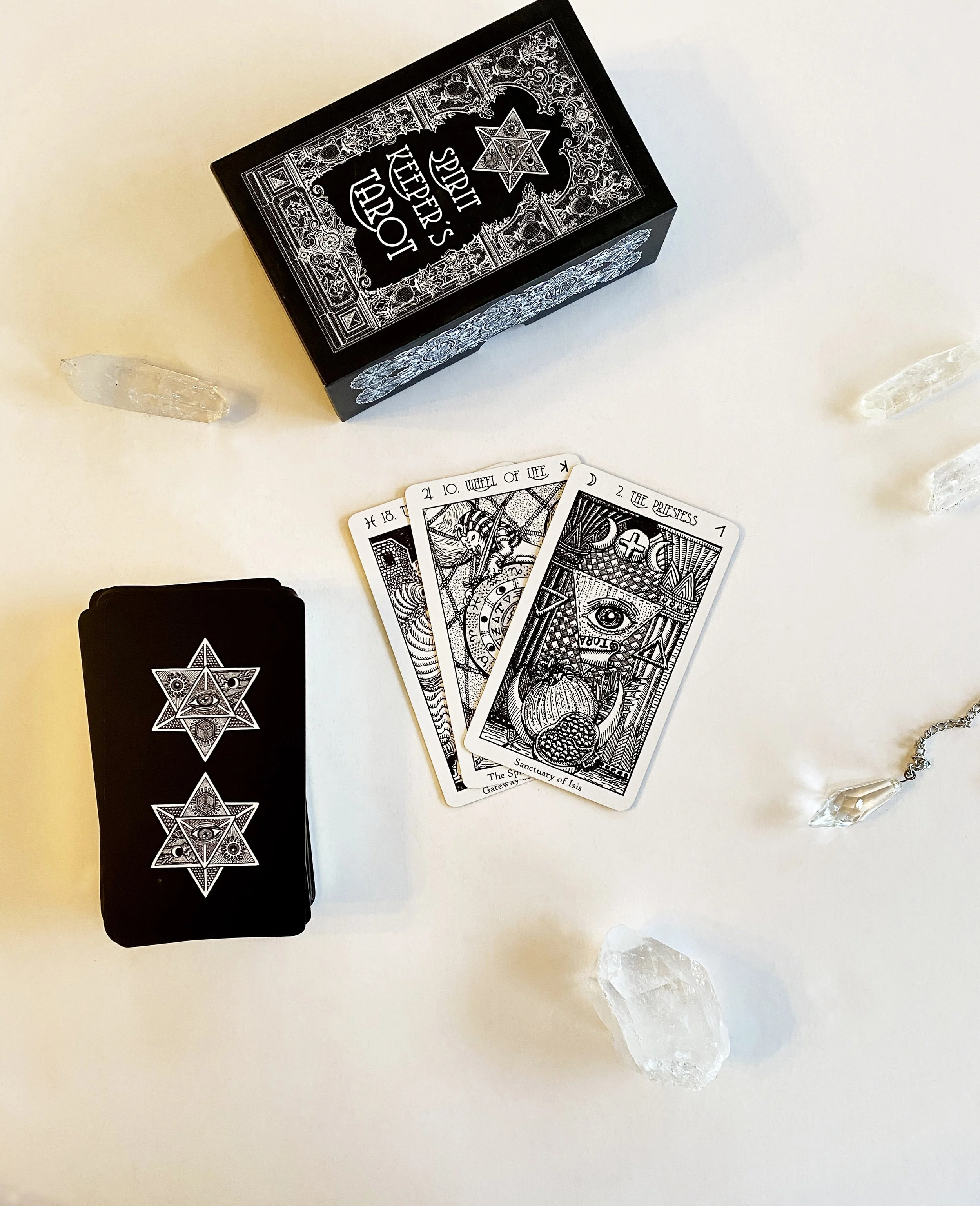
Spirit Keepers Tarot
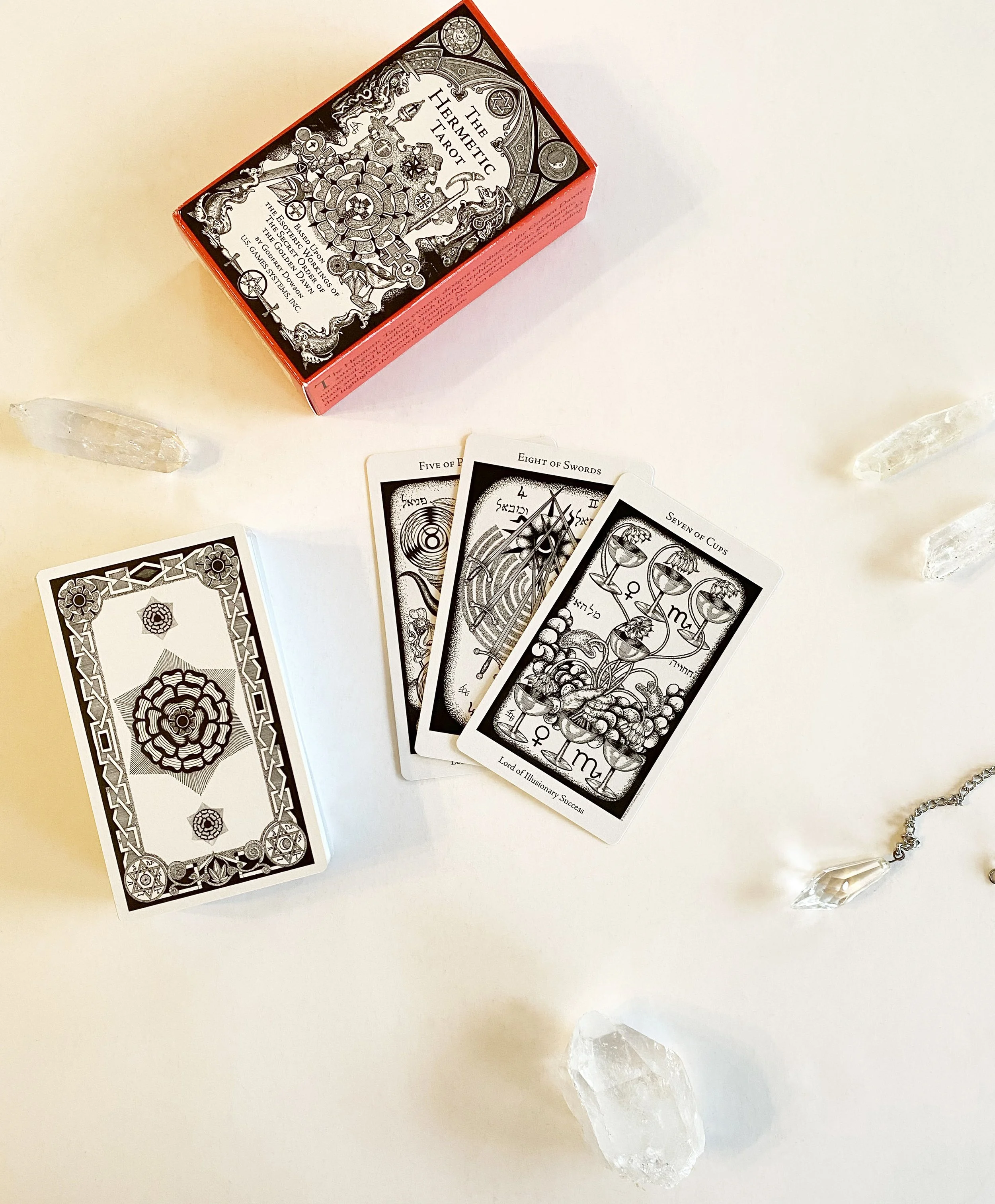
Hermetic Tarot
